

Published
6 minute read
That hillside drain may have behaved perfectly all summer. Then the first hard rain hits, a blocked outlet backs up, and water takes a shortcut across your driveway. Before the next storm, take a walk around your property. A few small changes can tell you where trouble is starting.
Start at the roof and follow the water downhill in your mind. Where should it go? Where did it go last time? If those answers have changed, make a note of it. You do not have to diagnose the problem on the spot.
Look at the gutters and downspouts you can reach safely. Are the downspouts connected to drains, or are they emptying beside the house or straight over the slope? If you see a fresh groove in the dirt below an outlet, water has likely been hitting that spot harder than the soil can handle.
On many hillside lots, area drains, swales, and terrace down-drains move runoff past the house. Clear leaves from grates you can safely reach, and check the outlet if you can see it without going onto a steep slope. An open grate does not tell you the pipe is clear. Water sitting at an inlet or leaving a new muddy trail suggests something farther down the line needs checking.
Be careful where a quick fix sends the water. Los Angeles County warns against drainage changes that create problems on neighboring properties. If you do not know where a buried pipe leads, get that checked before you reroute it.
Water may be reaching your lot from higher up the hill. Watch for it crossing a driveway or terrace and collecting against the uphill side of the house. After rain, a line of fresh silt on the patio or a fan of debris below the slope can show you the route it took.
You do not need to chase the water onto a neighbor's lot or across unstable ground. Take photos from a safe place and show them to the person inspecting your drainage. If the water is coming from above, a repair at the bottom of your lot may never address the source.
Think back to last rainy season. Has a bare patch spread? Is dirt piling up at the bottom of the stairs? Has a narrow channel appeared in the yard? Those are signs water is carrying your soil downhill.
A fresh ground crack, a bulge, or a fence that has begun to lean is more urgent. Photograph the change from a safe spot and call for an assessment. Keep off a slope that seems to be moving, and stay away from a fresh slide or a drain outlet while water is rushing through it.
A recently burned slope can send mud and debris downhill during a short, intense storm. The last light rain may have been uneventful; that does not tell you what the next downpour will do. If your home is below a burn area, watch local debris-flow alerts. Clear accessible drains, but remember that an open grate cannot stop a moving hillside.
When we assess a burned hillside, we look at both the ground holding everything up and the water moving across it. That tells us if drainage work is enough or if the slope needs structural support as part of the repair.
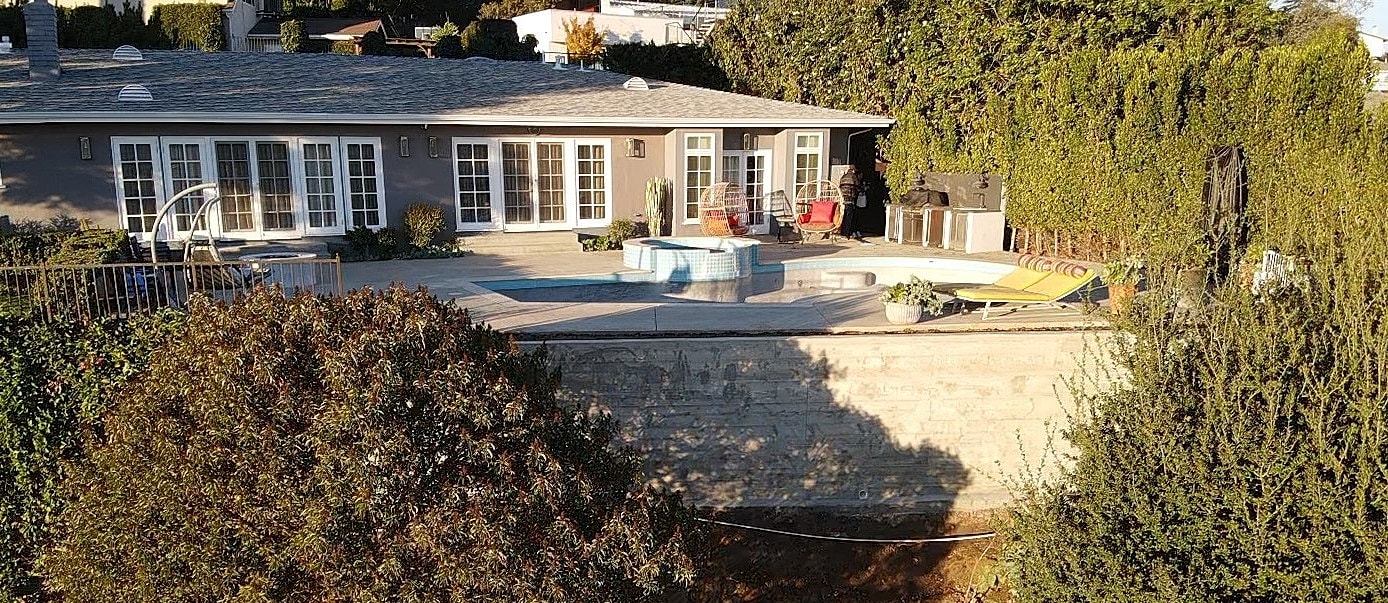
Take a look along the top of each retaining wall. Is it still straight? A new lean, a widening crack, a gap beside the paving, or soil washing out around an end can signal movement. If water suddenly pours through one section after rain, drainage behind the wall may be part of the problem.
Check the ground above the wall, too. Settled paving or a crack extending back into the yard can tell us as much as the wall face. On a retaining wall job, we assess the wall, the soil pushing against it, and where the water goes.
Look at decks, stairs, and exposed posts from a safe place. If a post has shifted or a gap has opened at a connection, have it inspected. Keep people off a deck or stairway that seems to have moved until someone qualified has checked it.
The lower side of the house often tells you where water has been sitting. Check for damp soil in the crawl space, stains on a foundation wall, seepage in the basement, or a puddle that returns after every storm. If you spot a new crack or gap near the house, take a photo and write down when you noticed it.
A damp spot does not automatically mean the foundation is damaged. It does tell us where to start looking. Depending on the source, the fix might be grading, a swale, or an underground drain; some properties also need structural work. The inspection is how we sort that out.
Before rain arrives, clear gutters and grates you can safely reach, check downspout connections, and make sure visible outlets are open. Photograph any erosion, backed-up water, or movement. Those pictures give us something concrete to compare when we inspect the site.
Hold off on digging beside a footing or retaining wall, and do not improvise a new outlet over the slope. Water needs a safe route all the way out. If a drain is blocked, runoff has changed course, or a wall has moved, schedule an inspection before the next heavy rain if possible.
Call before the next storm for a blocked drain or seepage that keeps coming back. For a new ground crack, a wall that is leaning, or a deck that has shifted, call promptly and keep people clear. If a slide is underway, move away from it and follow local emergency instructions. Sign up for alerts now so you receive evacuation and debris-flow warnings when they go out.
If water is heading toward your house or the slope has changed, call Alpha Structural for an inspection. We can trace where the runoff is going, check the structure