Seawall Construction

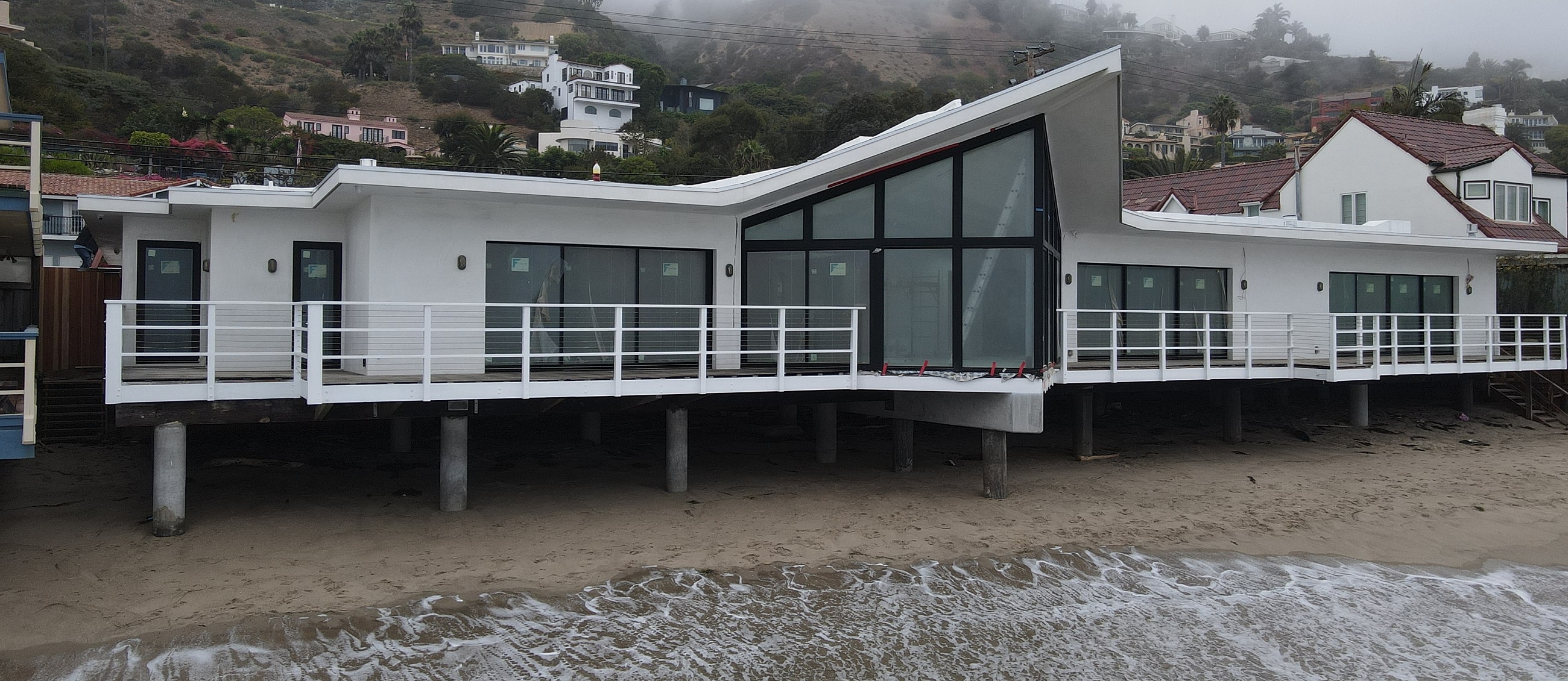

Owning coastal property in Southern California comes with a different set of structural risks. Waves do not need to look dramatic to cause damage. Over time, coastal erosion, bluff movement, drainage problems, and repeated wave impact can eat away at the land supporting a home, deck, or shoreline improvement. Seawall construction helps protect that edge before the loss becomes expensive and difficult to reverse.
For oceanfront and blufftop properties, a seawall can serve as a critical line of defense. Alpha Structural provides seawall design, structural engineering, repair, reinforcement, and new construction for properties facing erosion, shoreline instability, or bluff deterioration. These seawalls effectively protect the land, stabilize the site, and provide a coastal protection system that fits the actual conditions of the property.
Seawall construction refers to the building of protective structures along the coast to prevent coastal erosion, protect properties, and stabilize bluffs or shorelines. A seawall is a man-made barrier, usually built from concrete, steel, shotcrete, or rock, that is placed along the coastline to absorb and deflect wave energy before it erodes the land behind it.
In practical terms, seawall construction is not something that should be done without customization. The right solution depends on the site. Some properties need a new reinforced concrete seawall. Others need seawall repair and reinforcement, bluff stabilization, erosion control, or a combination of systems working together. Alpha Structural approaches seawall work as a site-specific structural problem, not a stock detail repeated from property to property.



Southern California’s coastline is beautiful, but it is not static. Bluff erosion, tidal impacts, storm surge, poor drainage, and years of wave battering can all undermine the ground supporting a structure. On some sites, the visible damage starts small. Hairline cracking. Surface sloughing. Minor voids. Then the edge keeps moving.
For blufftop and oceanfront properties, seawall construction can help slow land loss, protect improvements near the bluff edge, and reduce the risk of more serious structural problems. In many cases, the seawall not only protects the shoreline, but also foundations, access paths, decks, retaining features, and the long-term usability of the property.
A seawall is meant to do one job well: stand between the coastline and the land behind it. When it is properly engineered, it helps absorb wave energy, reduce active erosion, and support long-term site stability. That protection becomes especially important on coastal and blufftop properties where land loss can threaten structures, access, and resale value.
The value is not only in stopping immediate damage. It is in controlling future exposure. Once erosion gets ahead of a property, repairs often become more complex, more constrained, and more expensive. A well-planned seawall project can help owners act before that point.
Seawalls also work best when they are part of a broader coastal stabilization strategy, on some sites, that includes bluff stabilization, drainage improvements, erosion control, or shotcrete reinforcement. The right system depends on what is actually driving failure at the property.
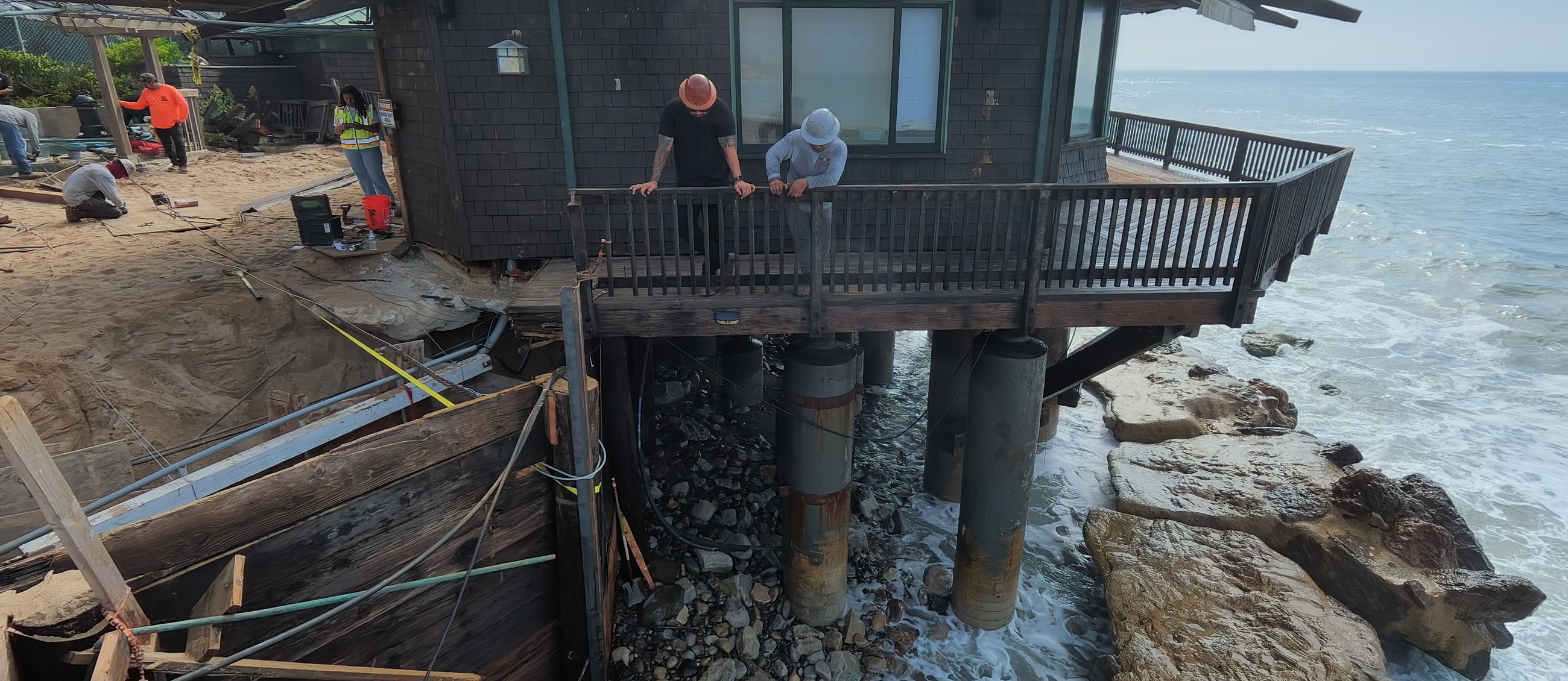
Seawall construction begins with a site visit and a close review of the property. Alpha Structural’s assessor evaluates erosion patterns, tidal exposure, site access, bluff or shoreline conditions, soil behavior, and the condition of any existing wall. That first step matters because coastal sites rarely fail for just one reason. Wave impact, poor drainage, hydrostatic pressure, foundation undermining, and long-term corrosion may all be part of the picture.
After the assessment, the engineering phase begins. This is where the site is analyzed to determine what kind of wall and support system makes sense for the property. Depending on the site, that may include a soils report, land survey, structural review, and coordination with specialized consultants when coastal entitlements or land use approvals call for added support.
Once the design direction is clear, the project moves into permitting and agency coordination. Coastal work often requires approvals from local building departments, planning departments, and, in many cases, the California Coastal Commission. Some projects may also require coordination with other agencies, depending on the site and scope.
Construction starts only after that groundwork is in place. Site preparation may include access planning, demolition, temporary shoring, and erosion-control measures. From there, the seawall is built or reinforced based on the approved design, followed by backfill or finish work where applicable, then final inspection and approval.
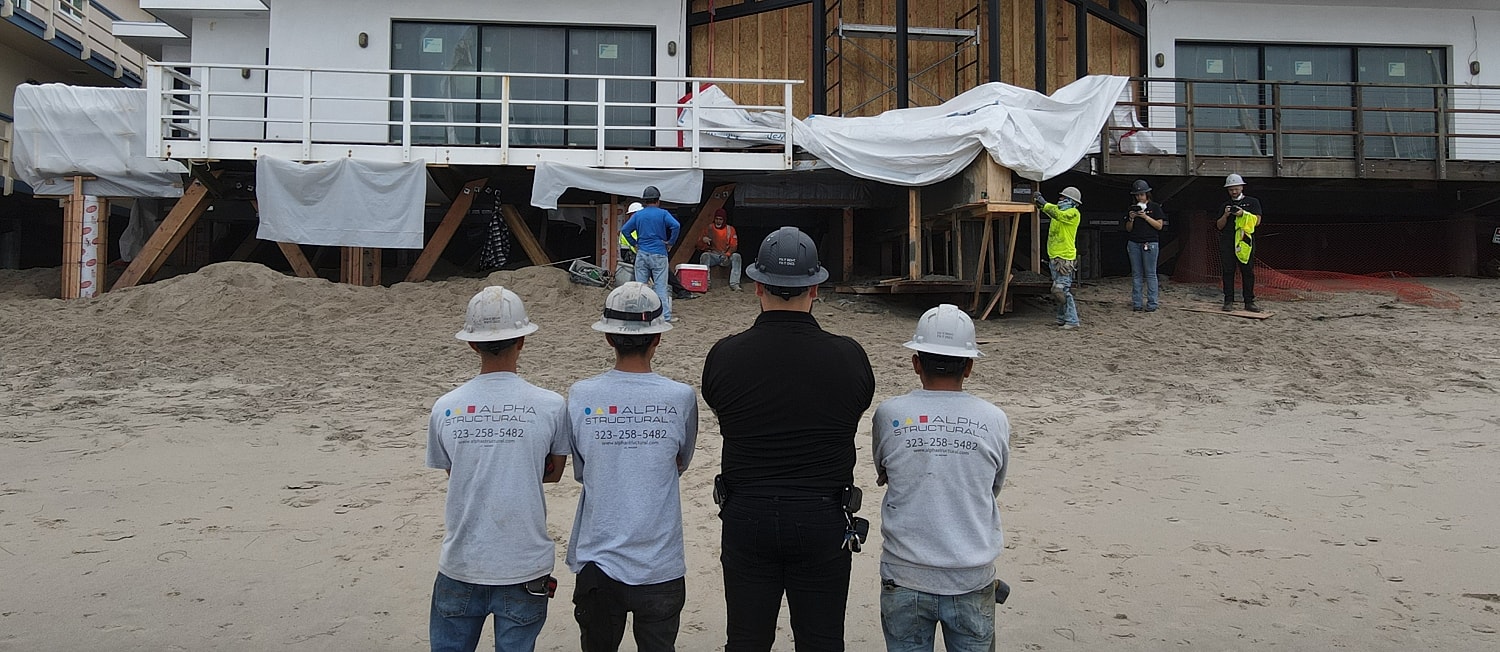
Cost depends on the site, the exposure, the type of wall being built, and the level of permitting involved. Oceanfront and blufftop work is rarely simple. Access can be difficult. Approvals can take time. Some properties need a new seawall from the ground up, while others need repair and reinforcement of an existing structure that has been weakened by age, wave battering, poor drainage, or foundation undermining.
Permitting also plays a major role in cost and schedule. Coastal projects often require more review than standard structural work. In Southern California, it is common for a seawall project to take 12 to 18 months from the start of engineering through construction, and some projects take longer depending on complexity and approvals.
The better comparison is not just construction cost. It is the cost of action versus the cost of continued erosion, bluff loss, emergency stabilization, and damage to improvements near the edge of the property.
Factors That Influence Seawall Construction Costs



Alpha Structural is thrilled to announce our partnership with GreenSky Financing, offering convenient financing options for your structural projects. Whether you need foundation repairs, seismic retrofitting, or other enhancements, our seamless financing solution through GreenSky empowers you to tackle your project with confidence. With flexible payment plans and competitive interest rates, you can now address crucial structural needs without financial constraints. Contact Alpha Structural today to learn more and embark on your home improvement journey with ease.
Alpha Structural handles structural engineering and construction in-house, which gives clients a more coordinated path from initial assessment through design and field execution. That matters on coastal work. Seawall projects are shaped by structural demands, site access, drainage behavior, erosion patterns, and a permitting process that can be difficult to navigate without experience.
For owners facing California Coastal Commission review or related approvals, Alpha can also coordinate with the necessary agencies and, when needed, refer or coordinate with specialized land use and coastal entitlement consultants. That kind of project management matters when timing and compliance can shape the whole job.
Not every coastal property needs a brand-new wall. In some cases, the better option is to repair and reinforce an existing seawall that still has structural value. That may include strengthening weakened sections, addressing drainage issues behind the wall, repairing damaged concrete, stabilizing erosion around the base, or improving the wall’s ability to handle repeated wave exposure.
Common reasons seawalls fail in Southern California include hydrostatic pressure, poor drainage, foundation undermining, wave battering, corrosion, and age. Alpha Structural evaluates those conditions directly and recommends whether the wall is a candidate for repair, reinforcement, or full replacement.
Coastal erosion does not pause while a property owner weighs options. Once shoreline loss starts affecting the land behind a home or blufftop improvement, the structural and permitting path usually becomes more complicated, not less.
Alpha Structural provides seawall design, structural engineering, seawall repair, reinforcement, new construction, bluff stabilization, and erosion-control solutions for Southern California coastal properties. If your site is showing signs of shoreline instability, bluff movement, or wall failure, schedule a consultation and get a clear plan for what the property needs.
The full process often takes 12 to 18 months from the start of engineering through construction because of the time required for coastal approvals and permitting. Complex projects can take longer.
Reinforced concrete is one of the most common and durable choices in Southern California. Other options can include shotcrete, steel, vinyl, or rock, depending on the site and the performance goals.
Yes. Most seawall projects require permits from local building and planning departments, and many also require California Coastal Commission review or other agency coordination.
It can help significantly, but blufftop properties often need more than one measure. Seawalls are often paired with bluff stabilization, drainage improvements, or shotcrete reinforcement to address the broader erosion pattern.
Properly engineered and built seawalls, especially reinforced concrete systems, can last 50 to 100+ years with minimal maintenance.
Yes. Alpha provides seawall repair, reinforcement, and full replacement when the wall is failing or no longer adequate for the site.
Yes. Access stairs, view decks, drain systems, and related features can often be integrated into the overall design.
Common causes include hydrostatic pressure, poor drainage, foundation undermining, corrosion, age, and repeated wave battering.